

Posted by Express Steel on Mar 17th 2026
Why Commercial Landscapers Depend on Rock Buckets
Commercial landscaping demands equipment that works as hard as the crew running it. From clearing construction debris to preparing seedbeds and managing large-scale property installs, every attachment must deliver consistent results under pressure.
There are clear reasons why commercial landscapers depend on rock buckets, especially when jobs require precision, durability, and efficiency in tough ground conditions. A well-built skid steer rock bucket transforms a standard machine into a powerful sorting and cleanup tool that saves time and reduces unnecessary wear on other equipment.
Built for Tough Ground Conditions
Commercial sites rarely offer clean, stone-free soil. Landscapers often work on new construction lots, renovated commercial properties, and large developments filled with rocks, roots, and leftover debris. A rock bucket allows operators to sift through material while leaving usable soil behind.
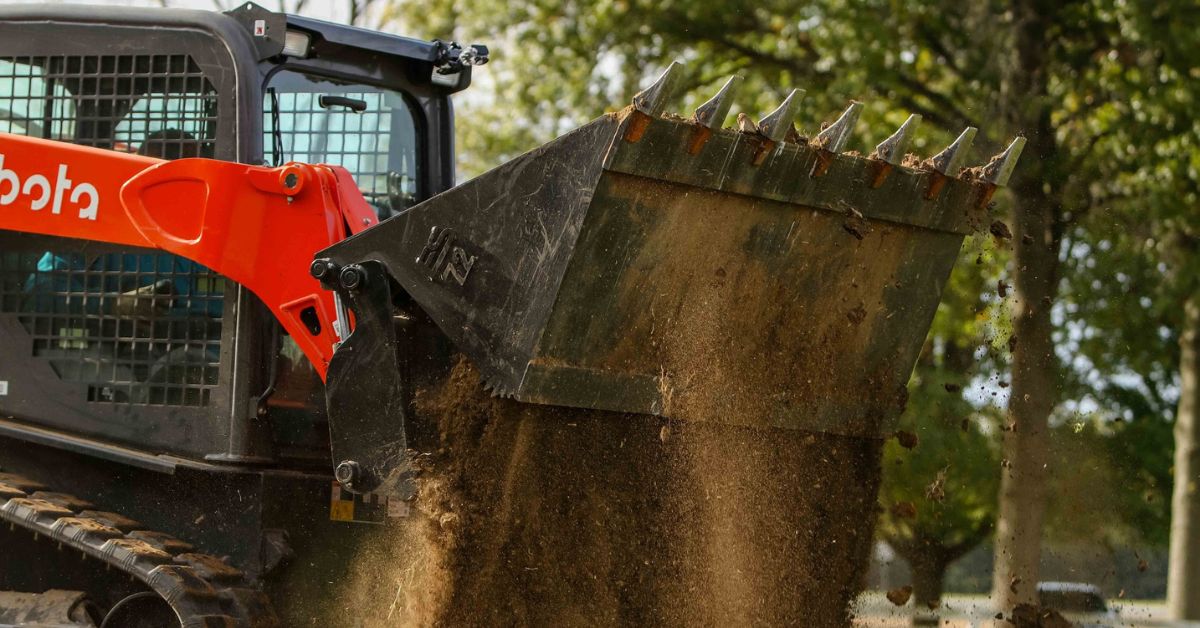
The tine design lets dirt fall through while retaining larger objects. Instead of hauling mixed loads off site, crews can process soil directly on location. This saves time and reduces hauling costs.
Heavy-duty construction also matters. Commercial landscapers need attachments that stand up to repeated contact with compacted soil and stone without bending or cracking.
Faster and More Efficient Site Prep
Proper site preparation sets the foundation for everything that follows. Whether installing sod, planting trees, or grading for hardscape features, crews must begin with clean soil. A skid steer rock bucket streamlines that process.
Operators can drive into piles, lift material, and shake out fine soil in a single motion. This replaces hours of manual raking and sorting. By completing debris separation quickly, crews stay on schedule and move to the next phase without delay.
Time saved on prep work adds up across multiple properties. For commercial landscapers managing several projects at once, efficiency directly affects profitability.
Protecting Other Attachments
Grading buckets and soil conditioners cannot handle large rocks. Using finishing attachments on unfiltered soil increases wear on cutting edges and internal components. Over time, that misuse leads to costly repairs.
A rock bucket handles the rough material first. By separating debris before final grading, operators protect more specialized tools from unnecessary strain. This extends the lifespan of equipment and reduces downtime.
Commercial landscapers understand that proper sequencing improves long-term performance. Using the right attachment at the right stage keeps machines working at full capacity.
Versatility Across Job Types
Landscaping companies handle a wide range of projects. One week may involve clearing land for new construction, while the next requires renovating an established commercial property. A rock bucket adapts to each of these tasks.
On construction sites, it separates scrap material from reusable soil. During renovations, it removes surface debris before reseeding or planting. When installing drainage systems, it helps sift backfill material before replacement.
This versatility reduces attachment changes and simplifies workflow. Crews can complete multiple steps with one reliable tool.
Reducing Manual Labor
Large commercial properties demand significant cleanup. Removing rocks and debris by hand across several acres slows production and strains crews. A skid steer equipped with a rock bucket dramatically reduces manual effort.
One operator can clear wide areas efficiently while other team members focus on skilled installation tasks. This division of labor improves overall productivity and helps teams complete projects on time.
Reducing repetitive manual work also improves morale. Skilled workers spend more time on planting, layout, and finishing rather than basic cleanup.
Improved Visibility and Control
Rock buckets provide better visibility than solid buckets. The open tine structure allows operators to see through the attachment, especially when handling lighter loads. This improves precision when working near curbs, sidewalks, and finished surfaces.
Load control also improves. Because soil falls through the tines, operators avoid carrying excessive weight. Balanced loads reduce strain on the skid steer and enhance stability. For commercial landscapers working in high-traffic or highly visible areas, control and precision make a noticeable difference.
Durability That Matches Commercial Use
Commercial landscaping equipment faces daily stress. Attachments must endure repeated impact, heavy loads, and abrasive material. A well-built rock bucket features reinforced tines, strong welds, and heavy steel construction.
Inferior buckets may warp or crack under consistent use. Commercial crews cannot afford downtime caused by preventable equipment failure. Investing in durable attachments supports consistent performance across multiple seasons.
Durability also protects long-term value. High-quality attachments retain their strength and usefulness even after years of demanding work.
Supporting Skid Steers and Mini Track Loaders
Landscaping crews often rely on both full-size skid steers and compact mini track loaders. Tight commercial properties and restricted access areas require smaller machines. Rock buckets designed for different machine types expand overall capability.
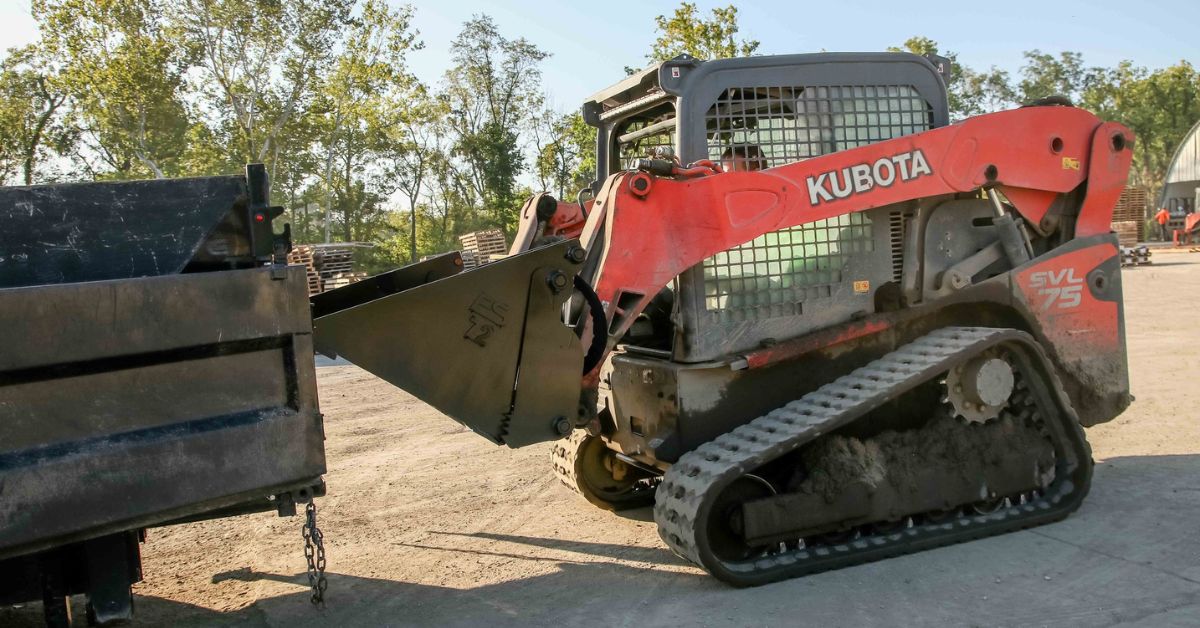
A mini track loader fitted with a rock bucket can access narrow gates and confined spaces without sacrificing performance. This flexibility allows crews to maintain the same level of efficiency across varied job sites. Matching the attachment to the machine ensures that every piece of equipment in the fleet delivers maximum value.
Delivering Professional Results
Commercial clients expect clean, polished results. Rocks left beneath sod or uneven surfaces caused by buried debris reflect poorly on the contractor. A skid steer rock bucket helps crews create smooth, stable foundations before installation begins.
By removing larger debris early, operators improve grading accuracy and surface consistency. The final product looks better and performs more reliably over time.
Understanding why commercial landscapers depend on rock buckets means recognizing how preparation affects long-term quality. The right attachment ensures each project meets professional standards.
Long-Term Cost Savings
While the initial investment in a heavy-duty rock bucket may seem significant, the long-term savings become clear quickly. Reduced labor hours, less wear on finishing attachments, and improved efficiency all contribute to lower operating costs.
Fewer equipment repairs and replacements also protect the bottom line. When crews rely on durable attachments built for commercial conditions, they spend more time working and less time managing breakdowns. The right attachment supports productivity, protects equipment, and strengthens overall job performance.
Dependable Performance for Demanding Commercial Projects
From debris separation to final site preparation, rock bucket attachments simplify demanding tasks and reduce unnecessary labor. Their durability and versatility make them essential tools on modern commercial job sites.
Express Steel manufactures American-made attachments built for contractors, farmers, landscapers, and municipalities. In addition to skid steer options, Express Steel offers mini track loader attachments, including rock buckets, to maximize productivity on any site. Call Express Steel to find the right attachment for your machine and keep your operation running efficiently.